History
New York Cigar History: From Tenement Rollers to Today
In the late 1800s New York City was America's largest cigar-making center, with thousands of factories and tenement workshops, and its cigar makers helped launch the U.S. labor movement.
Updated · New York Cigarillos Editorial Team
See Historic Tobacconists →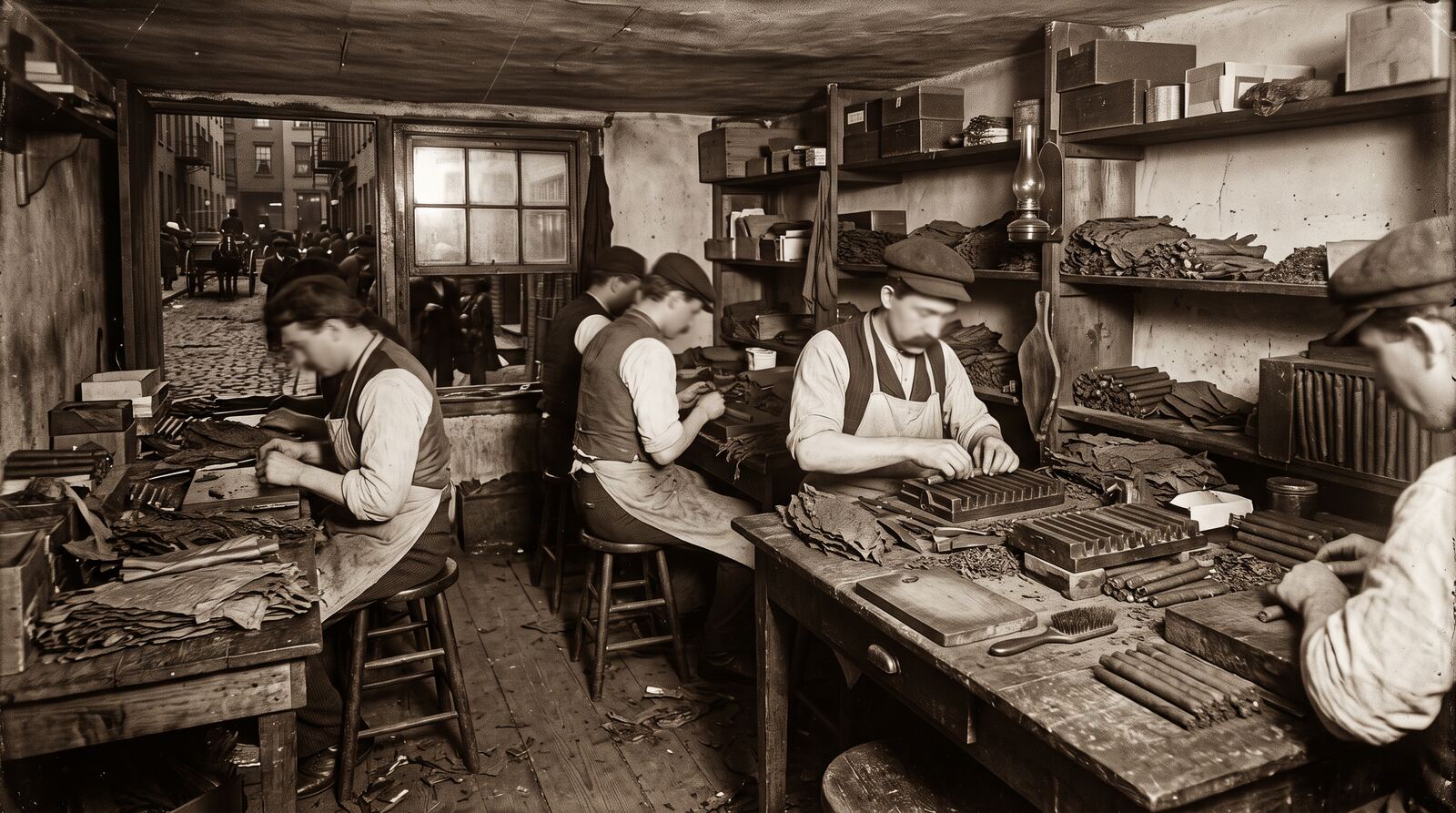
Today New York is better known for cigar prices than cigar making, but for much of the 19th century it was the heart of the American cigar industry. Immigrant rollers worked in factories and crowded tenement apartments across Manhattan and Brooklyn, and their struggles shaped American labor law.
New York Cigar History Timeline
| Year | Event |
|---|---|
| 1860s | Cuban and Spanish cigar makers begin settling in New York |
| 1875 | United Cigar Makers of New York, led by Samuel Gompers, joins the Cigar Makers' International Union as Local 144 |
| 1877–78 | Cigar makers' strike: more than 10,000 workers walk out |
| 1884 | New York bans cigar making in tenements |
| 1885 | In re Jacobs: New York's top court strikes the tenement ban down |
| 1886 | Gompers helps found the American Federation of Labor |
| 1890s–1930s | Puerto Rican cigar makers arrive; machines spread after 1917 |
| 1910 / 1930 | Barclay Rex and Nat Sherman open |
Quick answer: New York City was America's biggest cigar-making center in the late 1800s, with thousands of factories and tenement workshops. Its cigar makers, led by figures like Samuel Gompers, staged the 1877 strike and helped found the American Federation of Labor.
A City of Cigar Makers
By the late 19th century, New York had thousands of cigar factories, from large plants to one-room shops. Samuel Gompers estimated that at least 500 of the city's 3,000 cigar factories were owned by Spaniards and Latin Americans. Cuban, Spanish and later Puerto Rican rollers were prized for "out-and-out" cigars, made entirely by hand with a knife and a board, and were usually paid by the piece.
The Tenement System
Many manufacturers rented apartments to their workers at high rates and required them to roll cigars at home. Whole families, including children, worked amid drying tobacco in cramped rooms. Reformers and unions condemned the conditions, and in 1884 the New York legislature banned cigar making in tenements. The next year, in In re Jacobs (1885), the New York Court of Appeals struck the law down as an unconstitutional interference with property and liberty — a decision that shaped American labor law for decades.
The 1877 Strike and Samuel Gompers
In October 1877, more than 10,000 New York cigar makers walked out over low wages and the tenement system; the average cigar maker then earned about $3 a week. The strike lasted until February 1878 and won some gains in hours and pay. Samuel Gompers, a cigar maker who led Local 144 of the Cigar Makers' International Union, went on to help found the American Federation of Labor in 1886 and became its first president.
Machines and Decline
From around 1917, cigar-making machines began replacing hand rollers. Production shifted to cheaper locations and, later, to the Caribbean and Central America. See our sister sites on Nicaraguan cigars and Dominican cigars for where premium cigars are made today.
The Retail Era
As manufacturing left, New York's cigar culture moved to retail. Shops like Barclay Rex (1910) and Nat Sherman (1930) became institutions; read historic NYC tobacconists. Today's strict laws, covered in NYC cigar laws, mark the latest chapter.
Where to Learn More
The Samuel Gompers Papers project at the University of Maryland and the New-York Historical Society hold records of the city's cigar trade. Walking tours of the Lower East Side also tell the story of tenement workshops.
Frequently Asked Questions
Was New York City a cigar-making center?
Yes. In the late 1800s New York was America's largest cigar-making center, with thousands of factories and tenement workshops.
What was the 1877 cigar makers' strike?
A strike by more than 10,000 New York cigar makers from October 1877 to February 1878 over low pay and the tenement system.
What was In re Jacobs?
An 1885 New York Court of Appeals decision that struck down a law banning cigar making in tenement houses.
What was Samuel Gompers' link to cigars?
Gompers was a New York cigar maker and union leader who helped found the American Federation of Labor in 1886.
Why did cigar making leave New York?
Machines from around 1917, rising costs and the move of production to Florida, the Caribbean and Central America.